
Breathless? Check Your VO2 Max
In this Nexus🔗:
📍 What is VO₂ max?
🔎 Factors Influencing VO₂ Max
🏃♀️ How VO₂ Max is Measured?
📈 VO₂ Max Values by Age and Sex
🧬 Clinical Evidence on VO₂ Max and Longevity
💡 How to Improve Your VO₂ Max?
✅ My Own Experience During VO₂ Max Test
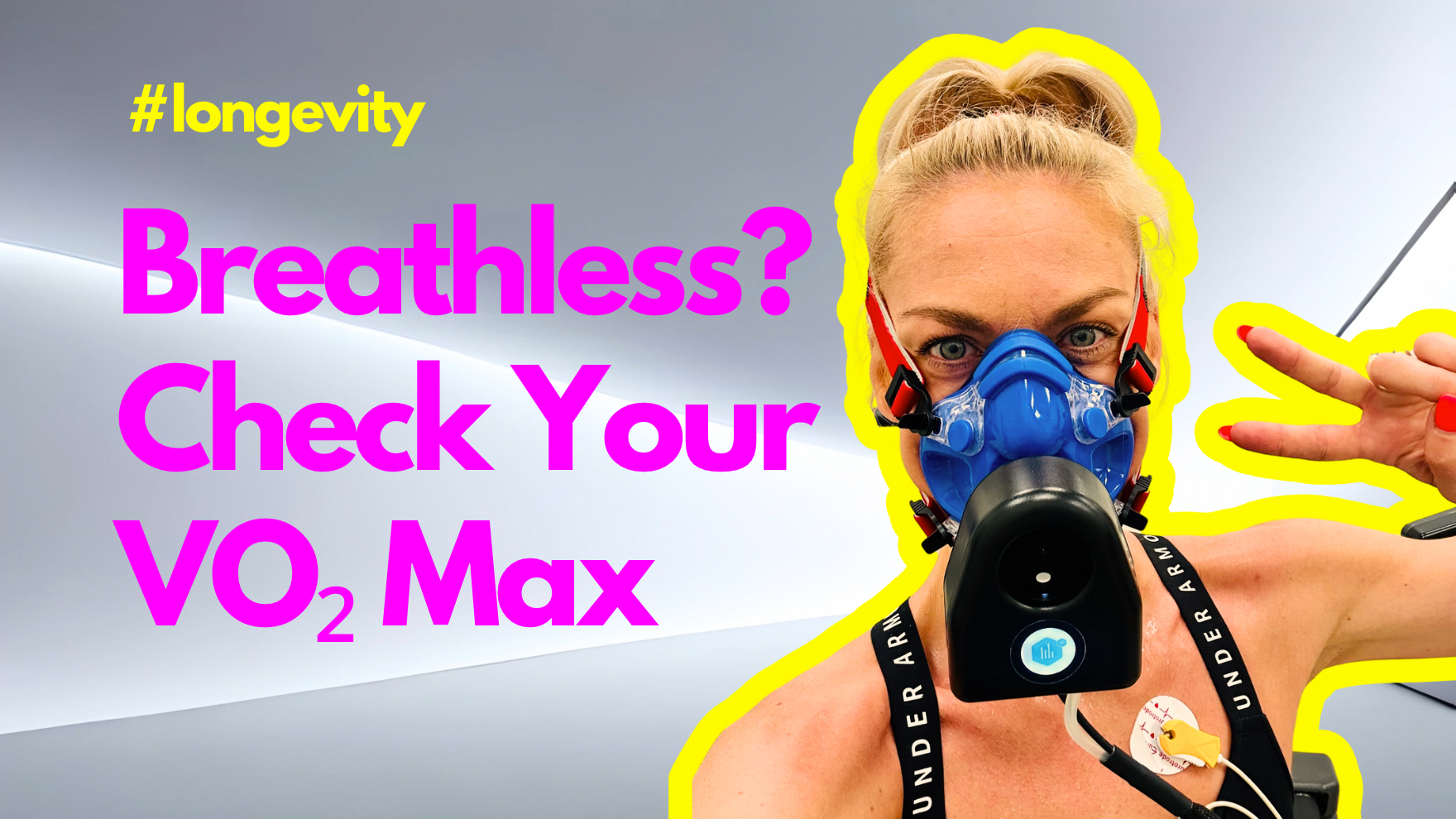
I hope I caught your attention with the picture itself? Longevity science is searching for the best ways to quantify our health and estimate the pace of aging – or, more drastically put, to estimate the time of our death, i.e., how much time we have left. And while numerous biomarkers are being researched, one of the most reliable indicators of longevity is maximal oxygen uptake, or VO₂ max. VO₂ max is a fundamental measure of aerobic capacity and a powerful predictor of cardiovascular health, physical performance, and lifespan. In this Nexus, I discuss the physiological significance of VO₂ max, how it is measured, its normative values across age and sex, its relationship with longevity, and, as always, share my personal experience about my VO₂ max test.
What is VO₂ max?
VO₂ max, or maximal oxygen consumption, is defined as the highest rate at which oxygen can be taken in, transported, and used during intense exercise. Expressed in milliliters of oxygen per kilogram of body weight per minute (mL/kg/min), it represents the integrated function of the respiratory, cardiovascular, and muscular systems. VO₂ max reflects:
- The ability of the lungs to oxygenate blood
- The capacity of the heart to pump oxygen-rich blood
- The efficiency of skeletal muscles to extract and utilize that oxygen
It is one of the most accurate indicators of cardiorespiratory fitness and has been described as a “vital sign” by exercise physiologists due to its predictive value for morbidity and mortality.
How VO₂ Max is Measured?
VO₂ max is typically measured via cardiopulmonary exercise testing (CPET), involving progressive treadmill or cycle ergometer exercise while analyzing expired gases. Simply put, you either run or cycle, and the load is gradually increased.

The key criteria confirming true VO₂ max include:
- A plateau in oxygen uptake despite increased workload. When the V̇O₂ stops climbing even though the treadmill or bike keeps getting harder, it shows that the body can’t use more oxygen.
- Respiratory exchange ratio (RER) ≥ 1.10. RER compares how much carbon dioxide you exhale to how much oxygen you use while breathing during rest or exercise. A lower RER (around 0.7) means your body is mostly burning fat for energy, while a higher RER (close to 1.0 or above) means you’re mainly burning carbohydrates and starting to work closer to your limit.
- Reaching age-predicted maximal heart rate (±10 bpm). Heart rate rises almost linearly with effort until it plateaus at a person’s true maximum heart rate, hitting the expected zone (traditionally estimated as 220 minus age) indicates that the heart was pushed close to its limit. For instance, a 40-year-old should finish near 180 bpm.
- Volitional exhaustion. It means the person stopped only because they truly had nothing left, not because of discomfort or fear.
When the signs mentioned above align, the recorded value can be trusted as a true maximal oxygen uptake.
What Does Science Say?
Factors Influencing VO₂ Max
Multiple high-quality studies show that VO₂ max is shaped by both inherited biology and modifiable circumstances. VO₂ max is heavily influenced by genetics, training status, age, sex, and altitude (1).

Genetics alone explain roughly 40–50 % of inter-individual differences. In the HERITAGE Family Study, Bouchard and colleagues found a heritability of 47% for baseline VO₂ max and similarly strong genetic control over how much it improved with identical training protocols (some participants gained >40 %, others <5 %) (2).
Training status is the largest modifiable determinant of VO₂ max. Sedentary adults who completed 3–5 sessions of endurance exercise per week for 6 months increased VO₂ max by an average of 17 % in a meta-analysis of 37 randomized trials, whereas elite endurance athletes routinely show values VO₂ max of 70–90 mL/kg/min due to years of high-volume aerobic work (3).
Age produces an almost linear decline of VO₂ max of ~10 % per decade after 30 years. The Baltimore Longitudinal Study of Aging documented that a 60-year-old typically has a VO₂ max about 60 % of a 20-year-old’s, even after adjusting for activity levels (4).
Sex differences are also robust. Women average 15–20 % lower VO₂ max than men of the same age because of smaller stroke volume, lower hemoglobin concentration, and less lean mass, as confirmed in >20,000 treadmill tests from the FRIEND Registry study (5).
Altitude acutely depresses aerobic capacity. Exposure to altitudes of 4,300-5,260 m from 2 to 10 weeks lowered VO₂ max by 26-29%. Long-term high-altitude residents regain part (but not all) of that loss through erythrocytosis and ventilatory acclimatisation (6).
VO₂ Max Values by Age and Sex
As mentioned, VO₂ max values naturally decline with age due to physiological changes such as decreased cardiac output and muscle mass. Also, there are clear differences between men and women. Below is a simplified chart adapted from the American College of Sports Medicine norms:


VO₂ max is often used to assess endurance potential in athletes. However, it’s not the sole determinant. Other factors like lactate threshold, running economy, and mental resilience contribute significantly. Still, VO₂ max sets the upper ceiling for aerobic energy production. Elite male endurance athletes often record VO₂ max values between 70–85 mL/kg/min, while females range from 60–75 mL/kg/min.
In non-athletes, improving VO₂ max through aerobic exercise (e.g., HIIT, zone 2 training, moderate continuous endurance exercise) is associated with improved metabolic health, lower blood pressure and insulin resistance, increased mitochondrial density, enhanced quality of life and physical independence with age.
Clinical Evidence on VO₂ Max and Longevity
As always for me – clinical evidence is the king and the queen all together. A number of high-quality cohort studies have confirmed the inverse relationship between VO₂ max and the risk of mortality.
The Aerobics Center Longitudinal Study, a landmark study of over 13,000 participants, Blair et al. showed that low cardiorespiratory fitness was a strong predictor of all-cause mortality, even after adjusting for traditional risk factors (7).
Men in the lowest quintile of VO₂ max had a 3.7-fold higher risk of all-cause mortality compared to those in the highest quintile.
In a Cleveland Clinic Study published in JAMA Network Open, a retrospective analysis of over 122,000 patients was performed (8). Death from any cause occurred in 13 637 patients during a median follow-up of 8.4 years (range 4.3-13.4 years).

Kaplan-Meier curves of all-cause mortality stratified by performance groups demonstrated significant, incremental reduction in all-cause mortality associated with increasing performance. Elite performers had increased unadjusted survival (lowest mortality risk) compared with all other groups, including high performers. This means that there is no upper limit of VO₂ max benefits.
VO₂ max was a stronger predictor of mortality than smoking, diabetes, or coronary artery disease.
The Norwegian HUNT Study published in BMJ in 2020 tracked more than 4,000 adults for 24 years and showed just how powerfully cardiorespiratory fitness predicts long-term health (9).
Researchers found that for every 3.5 mL/kg/min (roughly one metabolic equivalent) increase in VO₂ max, the risk of death from any cause fell by about 15 percent.
In practical terms, even modest improvements in aerobic capacity achieved through regular endurance activities like brisk walking, cycling, or running translate into markedly longer life expectancy. Because VO₂ max reflects how efficiently the heart, lungs, and muscles deliver and use oxygen, it captures the integrated vitality of multiple organ systems, raising it cushions the body against the chronic diseases of aging and provides one of the most potent, measurable ways to add healthy years to life.
How to Improve Your VO₂ Max?
If you measured your VO₂ max and it’s not great (or even if you haven’t), you can still improve by putting some effort and mixing different cardio activities. Combining elements like high-intensity peaks, aerobic base work, unwavering week-to-week volume, and occasional oxygen-short environments (anaerobic training) creates complementary stresses that collectively drive VO₂ max upward and translate into better endurance and, ultimately, greater longevity.
- Interval (HIIT) sessions. Incorporate 1–2 workouts each week that alternate hard pushes (such as four repeats of four-minutes at 90–95 % of your maximum heart rate) with equal-length easy recoveries. These sharp spikes in effort stress both the heart and peripheral muscles, stimulating larger stroke volume and more oxygen-hungry mitochondria.
- Zone 2 endurance. Balance the “red-line” work with longer, steady efforts – 40-90 min runs, rides, or rows performed at about 60–70% HRmax (maximum heart rate) where you can still converse. This low-to-moderate intensity uniquely boosts mitochondrial density and fat-oxidation efficiency, raising the aerobic ceiling that your high-intensity intervals build upon.
- Weekly consistency. Aim for the World Health Organization minimum of 150 min of moderate or 75 min of vigorous aerobic exercise. Ideally spread across at least three days and progressively add volume or intensity. Regular exposure keeps cardiovascular adaptations from regressing and allows gradual, sustainable VO₂ max gains.
- Strategic altitude or hypoxic exposure. Living or periodically training at 1800–2500 m (6000–8000 ft) can stimulate erythropoietin release, increase red-blood-cell mass, and improve the blood’s oxygen-carrying capacity. Of course, this is not for everyone.
My Own Experience During VO₂ Max Test
There are couple of advices I can give from my own experience:
- Choose wisely between bike or run. Before the test you can choose either bicycle or treadmill run. I chose running just because this is one of the activities that I do. But I usually do it outdoors, not on a treadmill. And being connected to all those things and running at increasing pace was not the most comfortable feeling. I was afraid to fall off. Also, when I was running at a higher pace, some of the sensors that were measuring my cardiogram were falling off so it was not very accurate.
- Communicate clearly with your physician. During the test, you cant speak, because the gas that you breath in and out are being measured. Therefore, you need to be very clear with your signs, because it is you who tells the doctor that you cannot go on anymore. And my test was stopped prematurely, just because my sign was not clear, and I could really still push the limit further. Thus, even the doctor commented that my result of 42 might not be the most accurate one and he predicted the real number to be higher. Well, a good reason to repeat the test, and this time most probably on the bike.
- Ask and listen to the advices and explanations. After the test is done you not only get that magic number, but also some good guidance on how to improve. Don’t be shy to ask your test physician all the possible questions. This is the reason why you are doing it.
Sharing my results below for you to see what to expect. Keep in mind that the report depends on the device and the clinic, so what you will get might be slightly different.


VO₂ max is more than a number – it is a biomarker of your vitality. It offers a window into cardiovascular, pulmonary, and muscular health. Whether you’re an elite athlete or a sedentary adult, increasing your VO₂ max can significantly lower your risk of chronic disease and premature death. As a “lifespan fitness score,” it deserves more attention in both preventive and performance medicine. Hope you enjoyed the read. More on longevity coming soon, stay tuned!
Subscribe to NexusPrenumeruokite „Nexus“
The science of living longer and better – in your inbox. Free, evidence-based, no spam.Mokslas apie ilgesnį ir geresnį gyvenimą – jūsų pašto dėžutėje. Nemokamai, pagrįsta įrodymais, be šlamšto.